

The Analytics tab
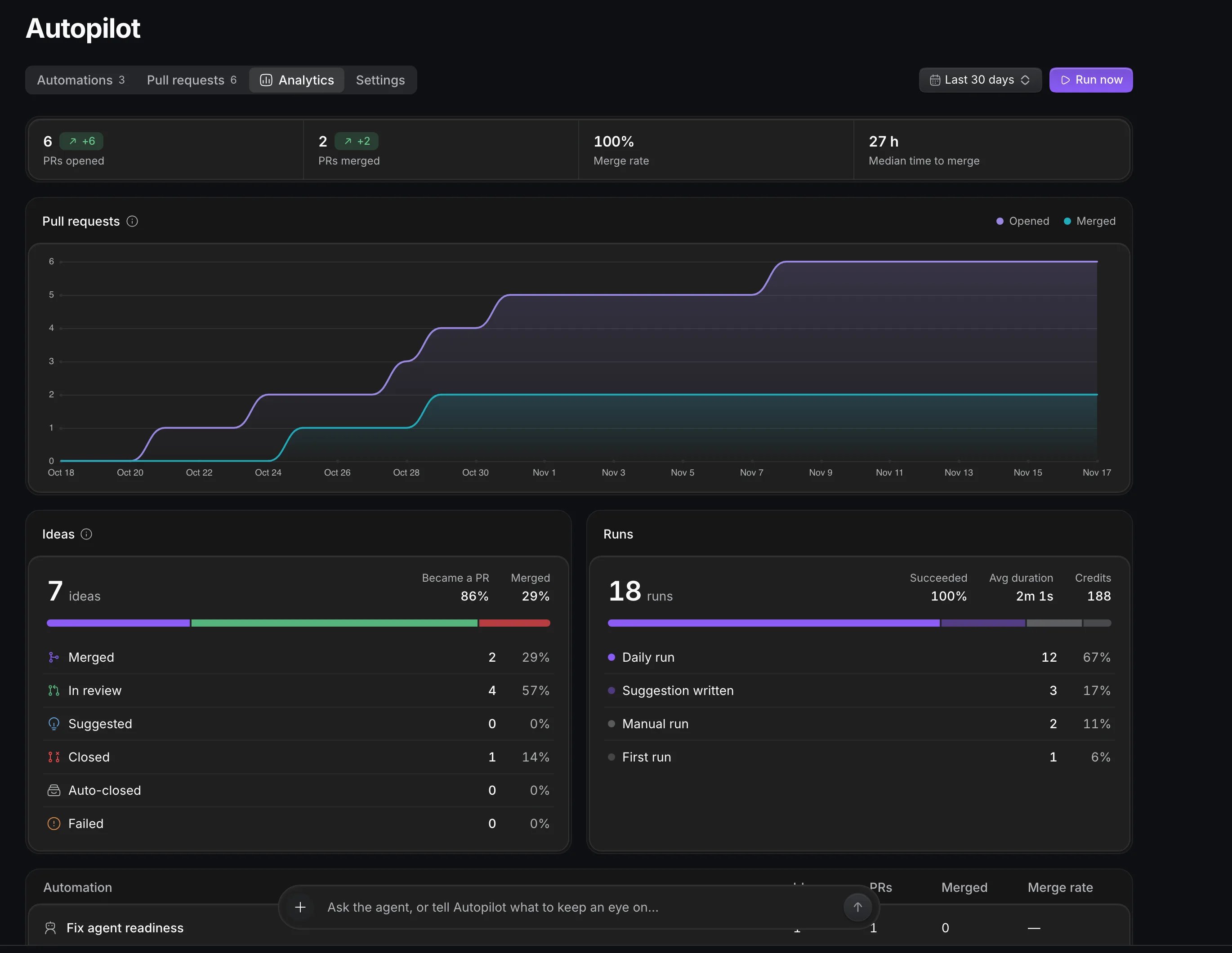
The Analytics tab shows Autopilot’s output for the last 7, 30 or 90 days, compared with the period before.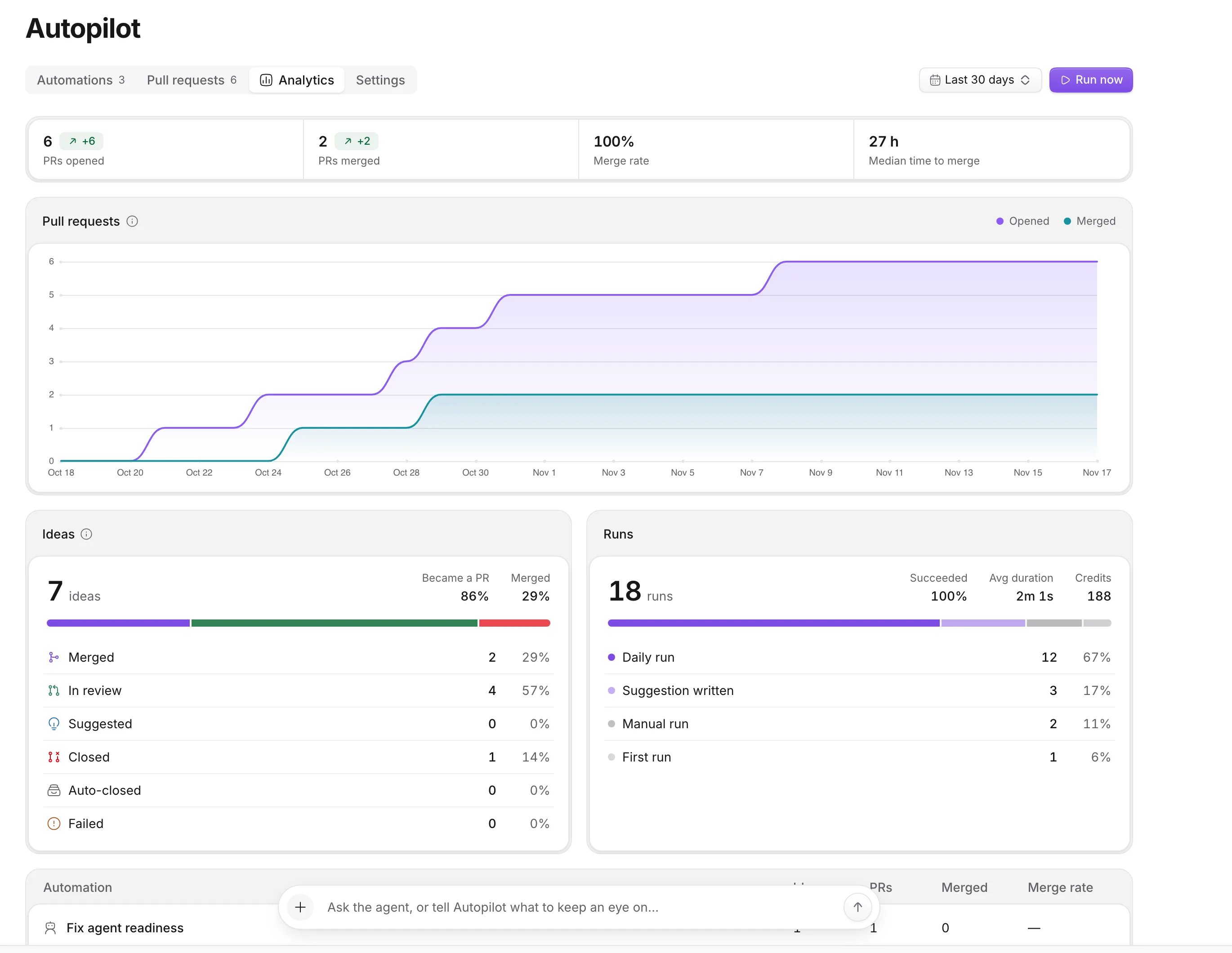
Before and after, per pull request
Open and merged pull requests with a measurable target show Before → now on their page, in the unit their automation targets:
Release posts and AI-readable fixes have no single number to measure, so they don’t show it.
Before the merge it reads “11% now”. After the merge it reads “11% → measuring” until new data arrives, then “11% → 40%”, “#14 → #6” or “61 → 78”. For AI mentions and citations, the after value covers the time since the merge, up to the last 14 days. Google position comes from the latest Search Console sync after the merge. Measuring reads your existing scans and syncs, so it costs nothing. Keep GEO scans and Search Console syncing for these numbers to move.
Pages followed until they’re indexed
A merged post only helps once it’s live and indexed. For 30 days after a merge, Autopilot follows posts and updates from content gaps, releases, comparisons and refreshes, and mentions each one in the brief once when something happens. If the page still doesn’t load three days after the merge, the brief says ”… was merged 3 days ago but … doesn’t load yet. Check that the site deployed.” With Search Console connected, it says “Google indexed … (…).” once Google indexes the page. If Google still hasn’t indexed it 14 days after it went live, the brief says “Google hasn’t indexed … 14 days after it went live. Link to it from a page Google already ranks or request indexing in Search Console.”Results shape what comes next
Autopilot looks at its merged posts and updates that are 14 to 180 days old and reads their last 30 days: AI crawler visits, AI assistant fetches, clicks from AI and human views (from Notra Sites or your AI traffic tracking), and your mention share before and after. The planner uses this to break ties between topics. Posts that didn’t work get one more try. 45 to 180 days after a merge, when no AI answer has cited the post and no AI assistant has fetched it, Refresh pages AI stopped citing updates the post once.Related
Mention rate
How AI mentions are counted.
Citations
How AI citations are counted.